


I have loved creating art for as long as I can remember. I was one of those kids who always had crayons or markers in hand, drawing pictures to make people smile. That love of art-making carried me into adulthood when I pursued art as a career. I enthusiastically got a Bachelor of Fine Arts degree and then an education degree. Right out of university I started my dream job as a high school art teacher. This was my “Before Life.” Before I developed allergies and Multiple Chemical Sensitivity (MCS).
This post may contain affiliate links. That means if you click and buy, I may receive a small commission (at zero cost to you). Please see my full disclosure policy for details.
The TILT Event
People who struggle with MCS often report experiencing an initial exposure or event that initiates the sensitivity to chemicals. This is often referred to as the “TILT event”. TILT or Toxicant Induced Loss of Tolerance is another name given to people who have developed sensitivities to previously tolerated substances. I can trace the beginning of my illness back to an incident from a waitressing job I had during my university years. My TILT event was an accidental exposure to an ammonia-containing industrial cleaner. It triggered a debilitating asthma attack that has since made me susceptible to a wide range of chemical triggers.
Chemicals in Art Supplies
After my TILT event, I became sensitive to solvents, oil paint, fixative sprays and cleaners. Really any chemical product with a strong odour. I was prone to headaches and often had asthma-like symptoms (coughing, chest tightness) that would commonly develop into upper respiratory infections. I had to drop classes like etching and photography that relied on using chemicals in the image developing processes. In the final year of my BFA program, I opted to do the bulk of my work in my residence room instead of the shared studio space. I didn’t think of it much back then but now I know that I was avoiding chemical triggers from my classmates.
My MCS (although I had no name for it back then) dictated the path of my art-making. I seemed to intuitively gravitate towards materials and processes that gave me the least amount of symptoms. Drawing media and digital art became my focus and I was quite happy and fulfilled creating works that were not as taxing on my body.
My favourite drawing medium by far was oil sticks. It was my compromise for giving up oil paints with all its solvent cleaners and toxic binders. Oil sticks are similar to an oil pastel in that it’s comprised of pigment in a solid, stick form. It contains more oil than a pastel, making it easier to blend and layer.
I convinced myself that it was safe for me to use as it is a certified non-toxic art supply. And because I didn’t know what I know now about MCS, I used it despite my body’s cues. I remember struggling with respiratory symptoms the last time I created a body of work with them (which was twelve years ago) but I powered through the discomfort because of their unique qualities. They were so rich and creamy and created such ethereal effects. Also because I needed to finish a body of artwork for an upcoming exhibition.
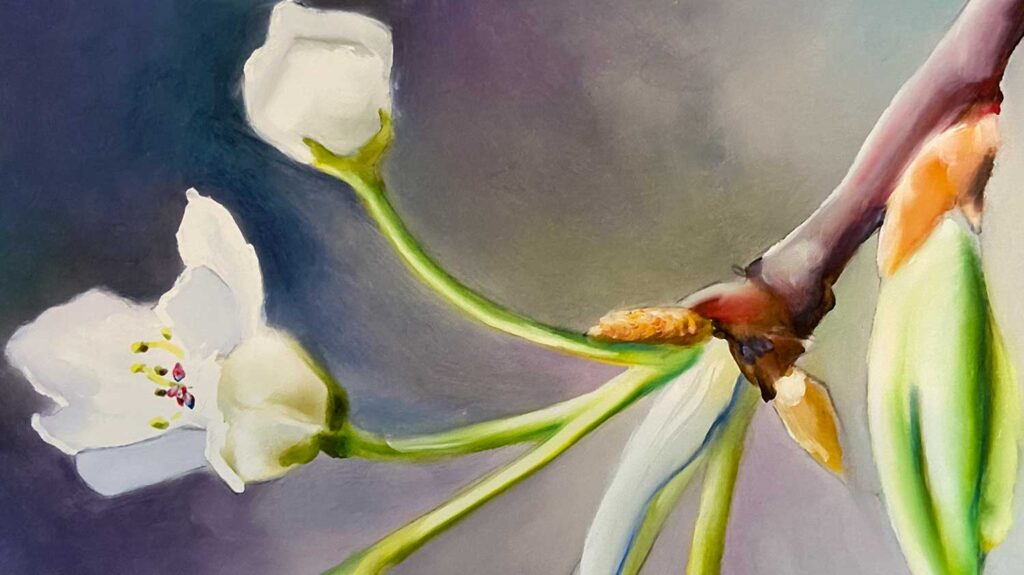
Being over a decade now on my MCS journey I have long since thrown out all art materials that are deemed obviously incompatible to my body. Or so I had thought. Apparently, I had been saving the oil sticks. Like a little treasure trove in the depths of my closet, this represented the last piece of denial that my body is the same as everyone else’s. I was saving them in case some day I would wake up and realize that this “sensitivity” to chemicals is just in my head. Or at best, a phase that I will eventually grow out of. Childish thinking, I know.
Testing Out Art Materials
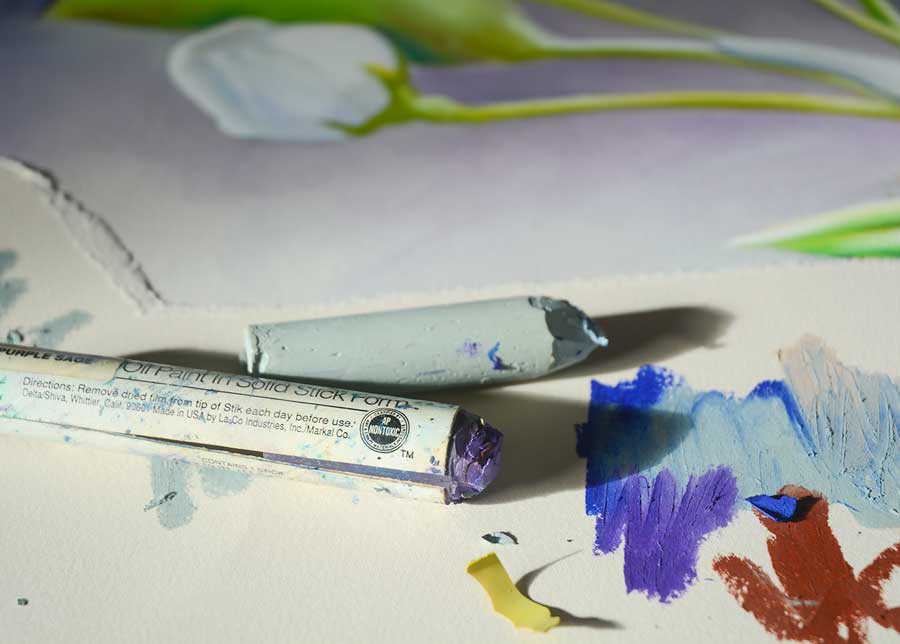
I couldn’t resist trying them out again. I dug out some paper, an Olfa knife and the oil sticks. As soon as I cracked the lid of the container, my olfactory system kicked into high gear and memories from my university years flooded out. Staying up late in the studio, furiously working alongside my classmates with critique deadlines looming. Then fast forwarding to the later years in my home studio. Working on my first solo art exhibition with a spectrum of new stick colours bought from my first art grant. Warm, comforting and inspirational memories spread through me.
Early Warning Signs
It took no time for my nose to get stuffy. I ignored it and turned on the air purifier I had in my studio. (Just to be safe). I used the knife to peel the skin off the titanium white and let it glide effortlessly on the rag paper scraps left over from a project. I smiled. Just like I remembered.
Then came the tickle at the back of my throat. I gave a little cough to clear it. “It’s fine. I’m fine. I can do this,” I thought. I peeled the crimson stick and layered it with the white. Smooth as butter. I created some swirls and used my finger to work it into the paper. Not long had passed before I wondered if I was getting a head cold. I decided that it was almost time to make lunch so I cleaned up the area and stored the sticks away.
Throughout the remainder of the day my body revealed more cues that everything was not all and well. My husband commented when my voice cracked and sounded just a tad huskier than usual. I found myself coughing a little every minute or so, as if coughing would scratch the itchy catch I felt when I breathed. A hit from my puffer did little to ease my airway. I noticed pressure forming behind the sockets of my watery eyes. On to the antihistamines and some ibuprofen.

Exposure Sickness
At some point, I finally admitted to myself that I had been fine just before I took out the oil sticks. I had felt fantastic, in fact. Moments after exposure to the sticks, my body began reacting. I’m glad that I caught it early and removed the trigger. Those annoying reactions were an early warning indicator. I got off easy with a headache and a nagging cough that lasted a couple of days.
I have had exposures in my years as a classroom teacher that knocked me out for weeks. Those incidents ate up my sick leave. For weeks following an exposure I would experience difficulty breathing, dizziness, extreme fatigue and an inability to think clearly (commonly referred to as “brain fog”.) These symptoms would last until my body detoxified from the chemicals it was burdened with. And I was exposed to a lot of chemicals at the school. There were industrial strength cleaners, solvents, floor wax, paint, deodorizers, diffusers, etc., used in the school building. Then there were perfumes, spray deodorants, sanitizers, creams, etc., worn by staff and students. Not to mention the overpoweringly fragranced laundry detergents, fabric softeners, dryer sheets and scent boosters. Avoidance of chemicals was impossible.
MCS Trigger Avoidance
One thing I have learned about MCS is that avoidance of triggers reduces the burden placed on the body and results in improved overall health. If a chemically sensitive person doesn’t practice avoidance of their triggers, their reactions will become more severe over time. They are also more likely to develop reactions to previously tolerated substances. Reducing the chemical load on the body is so important to prevent this escalation in the illness. I know that if I ignore my symptoms and choose to continue using oil sticks – or any of my other triggers for that matter – I will have a flare up. And I may increase my sensitivities to the point that my body will begin reacting to products that right now, I can safely use. Was I going to choose to be sick so that I could continue using this art material? Was it really worth it? No.
Finding Solutions
To avoid another weak moment, I contacted an artist friend of mine and asked if she’d like to have the oil sticks. She was delighted. Done. I also went through the remaining supplies and weeded out alcohol based markers and anything else that I may have been “saving” for the future non-sensitive me. Those are being gifted to a former student.
While I’m a little sad to have to close the door on another art medium that is not compatible with my body, I am proud of myself that I paid attention and caught it early. I’m putting my health first. I know that there are other art materials out there to explore. I just need to keep looking and experimenting. Most importantly, I need to keep listening to my body. You can follow along on my art journey here.


I’m sorry about your sensitivity. I have something like that too. I keep seeing Pinterest idea pins for people to make their own pastels and I’ve been wanting to try it. If you can tolerate pigments or natural earth pigments, you could probably make your own.
Thank you, Hannah. I have since switched over to watercolour paints and am so happy with them. I have had a surge of creativity since doing that and zero reactions from it. I am so grateful. If you end up trying to make your own pastels, I’d be very interested in how it turns out!
All the best,
Jess
I read this, and was so touched. Like it’s me… I am an artist, so when I read that most art supplies are toxic I was completely shocked. However, water-based paints also contain preservatives. These are biocides, formaldehyde, toluene, aniline, MOSH, etc. Otherwise mold would form.
So I painted in cooking oil until a chemist told me that even this forms formaldehyde when it hardens. It is so hard, I feel the same way as you. I especially love creamy paints.
Now I’m on the search of nontoxic art supplies. Childrens art supplies? Of course, they don’t meet the needs of an artist. And they aren’t free of those chemicals either. I don’t know what I can use, there’s this stuff everywhere. Most manufacturer say their products are „nontoxic“ but that’s only a marketing claim.
Hello Sabine,
I exclusively use watercolour paints now in my art making. And yes, they do contain preservatives like you mentioned.
Right now I can say that I do not react to using the conventional mainstream watercolour paints. But for safety, I stay away from the toxic pigments like cadmium and cobalt and anything labeled with a carcinogenic warning.
I’ve learned there are some brands that use honey as a preservative alternative. Have you looked into Beam paints? I’m not sure how lightfast those pigments are but I’m looking at getting some and doing some experimentation in the near future. If you learn of anything in your art journey, I’d love to hear about it.
All the best,
Jess