


Many commercial cleaners on the market have a long list of chemical ingredients and safety warnings for people and pets. This allergen-friendly cleaner uses simple ingredients that you likely already have under your sink. And it is effective, safe and very inexpensive to make.
This post may contain affiliate links. That means if you click and buy, I may receive a small commission (at zero cost to you). Please see my full disclosure policy for details.
Vinegar as a Cleaning Ingredient
Years ago, when a good friend shared that she only used vinegar to clean her bathroom, I thought she was kidding. That was a time before many people were concerned about household chemicals.
There really weren’t resources available online that promoted natural cleaners back then. Fast forward some years and I became unable to use standard household cleaners due to developed environmental allergies and sensitivities to chemicals.
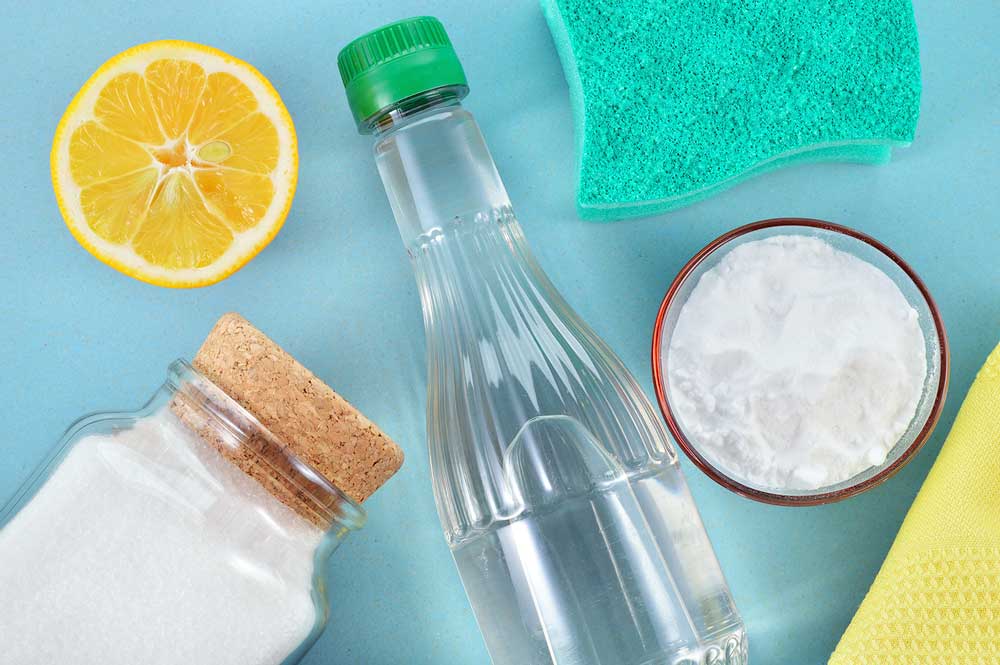
Vinegar is acetic acid and is a very effective cleaner. It easily breaks down grease and grime, disinfects and deodorizes. The last came as a surprise to me as vinegar has such a pungent smell.
As vinegar dries, the pungent odour disappears, along with the odors that were there before. Pretty amazing for a cheap and readily accessible ingredient.
Effective Uses for Vinegar Cleaner
I love using this vinegar cleaner to clean glass. Especially my windows. I have found it to be more effective than ammonia-based window cleaner.
This non-toxic cleaner is so effective in removing dirt and grease and leaves a streak-free shine.
It’s great in the kitchen as well. I use it daily on my induction cooktop to cut through the grease splatters and leave the glass sparkling.
While you can use vinegar mixed with water on its own to clean many jobs, I’ve found that adding a little bit of dish soap gives it added cleaning power.
This mixture is particularly effective on baked-on oven grease. Although it takes a little more soaking time and the addition of baking soda – another favourite allergen-friendly cleaning ingredient.
Where to use Caution
I would be careful using vinegar on tile grout. As it is an acid, exposure over time may begin to break down the components in the grout. When my grout needs a freshening up, I prefer to use this Homemade Deep-Cleaner instead.
Castile Soap and Vinegar Don’t Mix
It’s important to note that you need to use dish soap and not castile soap. Dish soap has glycerin in it and will mix well with vinegar. Castile soap is a base and vinegar is an acid. Mixing them will create an unusable mess. Trust me. I’ve done it. If you want to read more about it, check out Lisa Bronner’s post on Going Green.
Natural Dish Liquid
When I first tried this recipe I used Dawn Dish Liquid but as my sensitivities worsened and finding the unscented Dawn proved harder to source, I referred back to the Environmental Working Group website to research a safer alternative.
The EWG has a rating system for just about every product on the market. There I found a hypoallergenic and natural dish soap by Nature Clean and decided to give it a try. It is now my go-to washing up liquid and it works just fine in this recipe.

Allergen-Friendly Cleaner Recipe
Equipment
- 1 funnel
- 1 spray bottle
- 1 measuring cup
- 1 measuring spoon
Materials
- 1/4 cup white vinegar
- 1/2 tsp dish soap fragrance-free
- 2 cups warm water
Instructions
- Measure out the dish soap.
- Using a funnel, pour the soap into the spray bottle
- Measure the white vinegar and pour through the funnel into the spray bottle.
- Finally, measure the warm water and add to the mixture.
- Swish the bottle gently to incorporate all ingredients.


