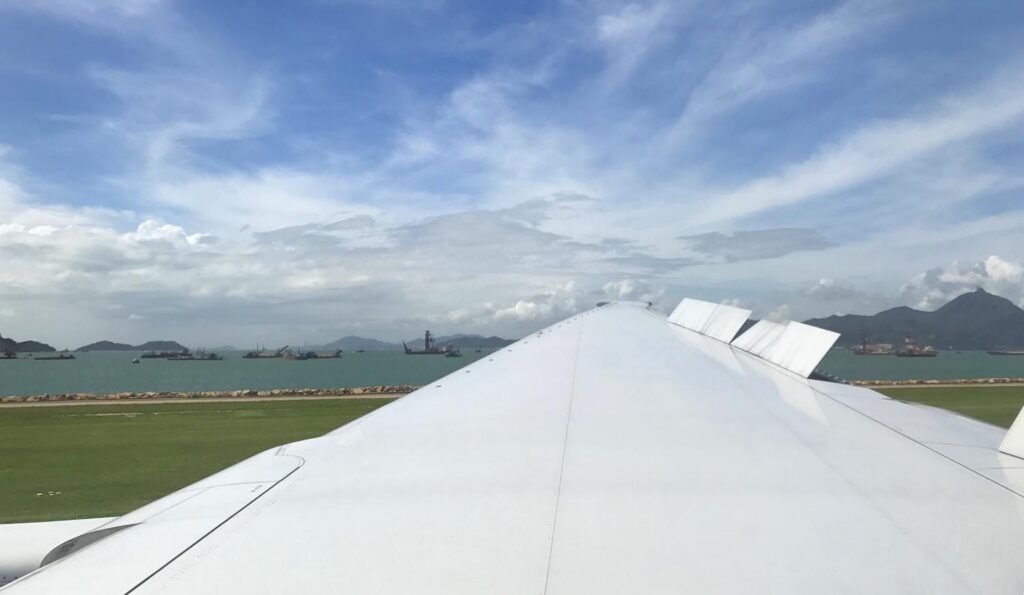
The key to an enjoyable and safe travel experience when you have food allergies and sensitivities is to plan ahead. Using some tried-and-true travel tips, I was able to fly from Canada to southeast Asia and back again with my family. Here’s how planning ahead can help you navigate the often unaccommodating world of air travel so you can have a safe and pleasurable trip.
This post may contain affiliate links. That means if you click and buy, I may receive a small commission (at zero cost to you). Please see my full disclosure policy for details.
The prospect of travelling when you have food allergies or chemical sensitivities can be daunting for those who are newly diagnosed. If given a choice, many sufferers would rather travel in their own vehicle where they have more control over their environment. I absolutely love road tripping in our truck camper for this very reason. But what about the times and circumstances where air travel can’t be avoided?
Preparing For the Flight
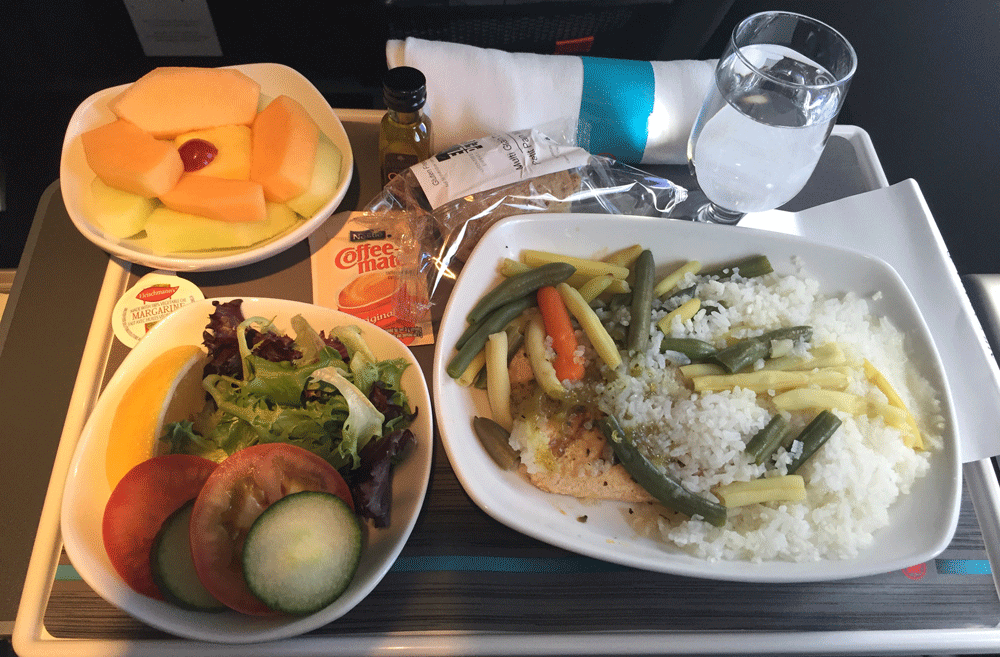
Before even booking your trip, do your airline research. Check out their websites and find out what meals are offered in flight. Specialty menus like gluten-free and vegan are often available but not always listed online. Contact them to explain your allergies/sensitivities and ask specific questions about what foods are served. Requesting specialty meals at the time of booking your flight ensures that there has been adequate time for the airline to make necessary accommodations.
Pre-Boarding the Flight
There is often adequate time for flight crews to properly clean the seating areas of the plane before the next passengers board. Request to board the flight early so that you will have time to wipe down any surfaces you or your allergic family member will be in contact with.
During a recent domestic flight I was shocked to see a passenger in the next row take a pack of roasted peanuts out of her bag. She offered some to her young son who thankfully declined. My heart was up in my throat until she returned the unopened package to her bag. Phew. But my eye was on her the rest of the flight. I scolded myself for failing to alert the flight attendant.
If there is risk of an anaphylactic reaction to airborne allergens, address your concerns with the flight crew. Request that they make an announcement to the passengers to refrain from consuming that particular allergen.
Bringing Your Own Food
On domestic flights pre-make and bring your own meals. This will ensure you won’t get sick from any unexpected ingredient served mid-air. Often it is far tastier than what they serve on the flight. Chicken salad wraps, cold pizza, vegan potato salad are all simple and easily transportable meals. Many times a fellow passenger has commented that what I had packed looked far more appetizing than what they were served in flight.
For international flights carry on meal replacement shake powder in the event the meal you ordered is not suitable. It was in airport security that I discovered that I was allowed to bring oat milk to mix with my shake powder on a transatlantic flight as it classified as ‘medical food’. Security agents performed the necessary testing to the oat milk and gave me clearance to carry it on.
If the rules have changed since then and your milk gets confiscated, there are often vendors inside security where you can purchase oat/soy/almond milk before you board the plane. And worst case scenario, you can always use plain water to mix on the flight. Having meal replacement shakes ensures your body gets the nutrients it needs (reaction-free) so that you’re at your best for your holiday.
Eating at Your Destination
For domestic trips, pre-make and freeze meals to take with you in the event you cannot find restaurants that cater to your allergies/sensitivities. I use a specialized food carrier which is originally designed for fitness competitions.

It has several plastic containers that stack neatly on top of one another inside the insulated center. It also includes extra pockets on the sides and space for ice packs to keep everything cool.
In the weeks prior to traveling, I prepare meals for the duration of the trip, portion them out and freeze them. Then it’s all ready to pop into the carrier before going to the airport. I include it in my checked-in luggage.


Once I get to my destination, I pop the containers into the hotel fridge and use as needed. This is a game changer as it takes the stress out of finding restaurants that have safe food options.
Even if you have a basic hotel room, hotel management will likely bring you a microwave if you request it. This is something you could ask prior to making a reservation. I often pack a toaster, some basic eating utensils, a small cutting board, dish cloth, towel and washing up liquid. Most of these supplies fit nice and tidy into the pockets of my food carrier.
Traveling internationally means several flight connections over multiple days so bringing the food carrier is impractical. I always try to book accommodations that have a kitchenette and are close to grocery shopping areas so we can prepare our own meals.
Once we arrive at our final destination, we stock up on staple foods and fresh produce.

We’ve learned from experience to bring what non-perishables we can with us. Gluten-free crackers, snack foods and pastas are easy to pack in our luggage. Many of our favorite brands we use are not available in countries that we visit. Or if similar products are available, they often lack english ingredient labelling.
Air Travel for the Chemically Sensitive
For people suffering from Multiple Chemical Sensitivity (also referred to as Environmental Sensitivity), air travel needs even more consideration. Avoiding certain foods to prevent a reaction is hard enough but how do you avoid what is in the air that you breathe?

Scents and Fumes
Unfortunately, airports and airlines are not always safe environments for the chemically sensitive. From heavily perfume-laden shopping areas and chemically sanitized bathrooms to fuel filled tarmacs; there are irritants around every corner.
Exposure to these irritants can cause severe reactions in sensitive individuals. I have experienced a full blown asthma attack once just trying to walk through a duty-free area to get to my gate.
Due to all the fumes and scents your luggage will be in contact with throughout your journey, consider packing your clothes and personal belongings in ziplock bags inside of your luggage. Putting your luggage in a fragrance free garbage bag once you arrive at your destination will prevent lingering scents from contaminating your hotel room.
Allergy Masks
Luckily, there are products on the market to help reduce the load from these exposures. A chemically sensitive friend recommended I try an allergy mask from Respro. They manufacture masks to suit many different purposes but this particular model helps to filter airborne chemicals.

It was a godsend on our trip to Southeast Asia. It effectively filtered out cigarette smoke, diesel fumes, chemical cleaners and perfume; allowing me to get to where I needed to go without having a dibilitating attack.
Medications
It can be difficult filling prescriptions in other countries so make sure to adequately prepare and take what you need for the entirety of your trip. Before you leave, check all medication to ensure it is full (especially with metered puffers like the one below) and not expired.

Pack all medication you might need for a reaction in your carry-on or purse so that you may access it easily in the airport or on the flight if needed. And if you’re travelling with a partner, show them where you keep everything so they can quickly assist if you’re not able to help yourself.
In-flight Considerations
If you are easily triggered by chemicals in perfumes, you will have to prepare yourself for the likelihood that you will be seated next to a scented passenger. And while you can keep a mask like Respro on for a short trip, if the flight is longer than a couple of hours, you’ll need to remove the mask to eat or drink. Not an ideal situation.
Alert the flight attendant to your condition before take-off to see if a seat change is possible.
When selecting a seat, I have found it better to be as far away from the bathroom area as possible. Bathrooms are notoriously noxious due to the cleaning chemicals and deodorizers used. Passengers are also more likely to apply scented personal care products there. Best to steer clear.
Booking Safe Accommodations
It can be difficult to find hotels that are suitable for the chemically sensitive. The key is to do your research before you leave home. Here are some things to ask the hotel staff prior to booking accommodations:
- Do they offer “fragrance free” rooms? Be very specific about what this entails:
- Is the bedding laundered in fragrance free detergent? How about the towels?
- Is the room carpeted? Have deodorizing cleaners been used?
- Have any scented cleaning products been used in the room?
- Does the hotel use a diffuser or other fragranced products in the main lobby, hallways or elevator?
If the staff can’t answer these questions to your satisfaction, keep researching.
Items to Bring From Home
If everything seems suitable, there are still things you should consider bringing with you in case there has been any miscommunication or mixup.
- bedsheets – bringing a set of sheets from home is an inconvenience but if you discover that the hotel bedding is in fact scented, you’ll be glad that you sacrificed the additional weight in your luggage for a good nights sleep.
- quick dry towel and face cloth – the hotel towels may have detergent or bleach odours and not suitable to use. It’s good to have a back up just in case. I love these as they don’t take up too much room in my bag and are dry in a couple of hours.
- vinegar cleaning solution – wipe down surfaces as a precautionary measure to remove any residue left from cleaners used.
- unscented laundry detergent – in case I need to wash face cloths, bathing suits, etc.
- castile soap – great for cleaning out the tub/shower area and washing dishes.
Decline Housekeeping
When I stay at a hotel for several nights, I keep the “Do Not Disturb” sign on my door so that housekeeping doesn’t come in to clean the room. Taking care of the room yourself minimizes the risk of accidental scented cleaners being used in your room. And really, you make your bed at home anyway so it’s not a big deal to clean up after yourself for a few days 😉
Recovering From Exposure
Vacations that are intended to be relaxing can be quite the opposite for sensitive and allergic individuals. The key to having a successful experience lies first in adequate planning and then in proper treatment post travel. When you get to your destination, try to reduce the stress and toxic load on your body by increasing hydration, eating nourishing foods and getting plenty of rest and relaxation.